
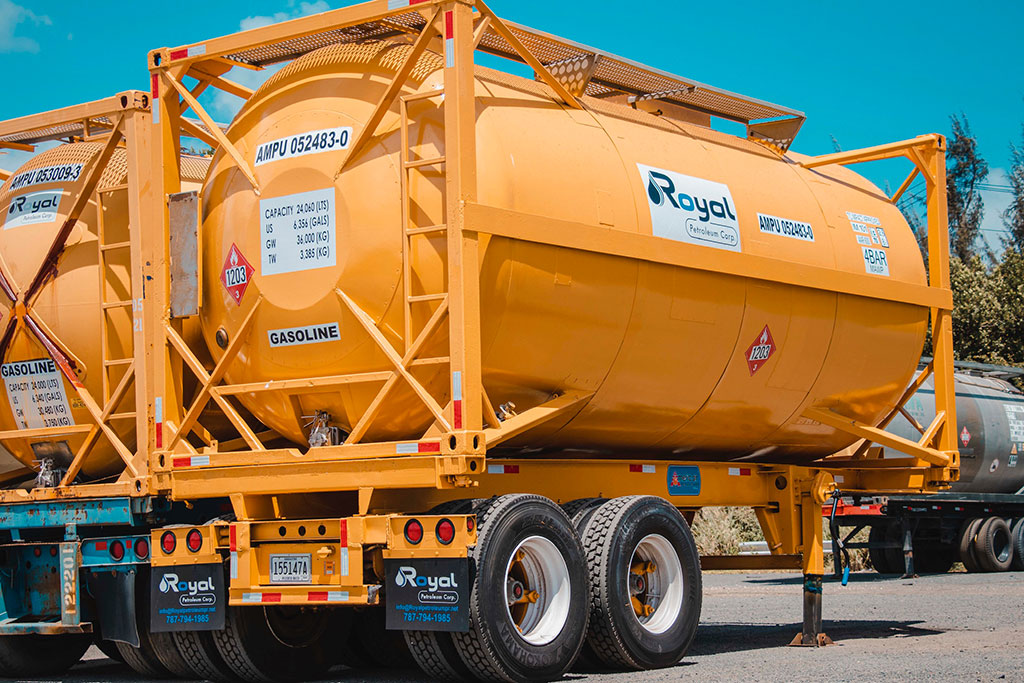
Royal Petroleum coordinates ISO tank fuel export transport for clients that require secure, flexible, and well-documented fuel movement across Puerto Rico and the Caribbean. Backed by more than 25 years of operational experience, our team works with clients, ports, and local authorities to move diesel, marine fuel, industrial fuel, and emergency fuel supply with practical planning and controlled execution.
Each operation is planned around product type, route, port access, delivery window, storage capacity, unloading conditions, and local requirements. This approach allows Royal Petroleum to adapt each shipment to the client’s storage capacity, schedule, destination, and operational requirements, which is especially important in Caribbean fuel transport, where timing, documentation, equipment readiness, and local coordination can directly affect service continuity.
What products do we transport through our ISO tank fuel export service?
Royal Petroleum transports ultra low sulfur diesel (ULSD) and 87, 91, and 93 octane gasoline through ISO tank containers. These are the fuel products transported through this service. Based on each client’s operational needs, the same fuel supply may support different uses, including industrial operations, power generation facilities, marine operations, vehicle fleets, and emergency preparedness.
- Use in Industrial Operations and Power Generation. ULSD may be used to support industrial operations, power generation facilities, and vehicle fleets that depend on reliable fuel availability. Delivery planning considers storage capacity, consumption levels, and peak demand periods, helping clients plan ahead and reduce the risk of supply disruptions.
- Use in Marine Operations. Fuel transported through our ISO tank service may also support private yachts, cruise ships, and commercial fleets at Caribbean ports. Our team coordinates deliveries based on port availability, docking schedules, receiving requirements, and controlled pumping procedures.
- Use in High-Volume and Continuous Operations. Manufacturing plants, energy operations, and other high-volume projects may require scheduled fuel deliveries to maintain operational continuity. Deliveries are planned according to average consumption, storage capacity, site access, and operational windows.
- Use in Emergency Preparedness and Response.Royal Petroleum also coordinates emergency fuel supply for hurricanes, power outages, and other critical events. ISO tanks can be prepared and dispatched according to availability, urgency, and route conditions when clients need fuel positioned for essential operations.
Where do we transport ISO tank fuel?
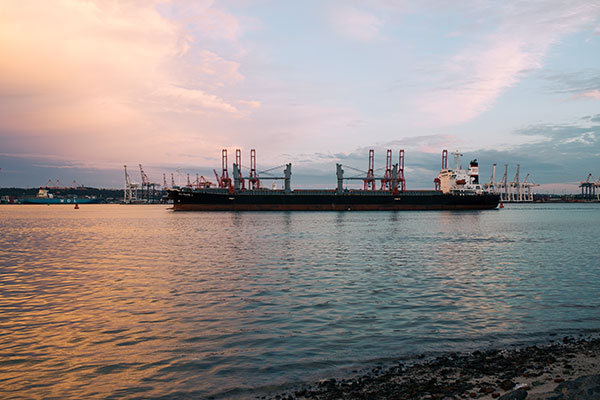
Royal Petroleum coordinates ISO tank fuel export throughout the Caribbean, including Puerto Rico, the U.S. Virgin Islands and neighboring territories.
Fuel transport across the region requires more than moving product from one point to another. Routes and dispatch schedules are planned around port access, local requirements, delivery windows, receiving capacity, vessel schedules, documentation needs, and the realities of each operation. Royal Petroleum adapts dispatch planning to each destination and client operation, helping each delivery move as efficiently as possible under the conditions of the route.
Who do we provide with ISO tank fuel export?
Royal Petroleum provides ISO tank fuel export services for clients whose operations depend on planned, documented, and flexible fuel movement across Puerto Rico and the Caribbean. These include marine operators, industrial facilities, construction teams, and organizations preparing for emergency fuel needs.
- Marine operators often need fuel deliveries coordinated around vessel schedules, port procedures, receiving availability, and controlled pumping conditions. ISO tank transport allows these operations to plan fuel movement with greater clarity when timing and port access are critical.
- Industrial facilities depend on fuel for manufacturing, cogeneration, equipment, and continuous operations. For these clients, ISO tank transport helps align deliveries with consumption patterns, storage capacity, delivery frequency, and possible demand spikes.
- Construction teams may require fuel for machinery, generators, and temporary power at remote or large-scale project sites. Coordinated ISO tank transport helps reduce uncertainty around site access, delivery timing, and fuel availability during active project phases.
- Emergency response operations require fuel planning before and during hurricanes, power outages, and other critical events. Royal Petroleum coordinates fuel movement around urgency, route conditions, tank availability, receiving capacity, and documentation requirements.
Fuel transport safety and regulatory compliance
Safety and regulatory compliance are part of every ISO tank fuel transport operation. Before loading, each ISO tank is inspected to verify tank condition, valves, seals, fittings, and required documentation. Deliveries are coordinated in line with applicable transport, port, safety, and fuel handling requirements, with attention to spill prevention, containment measures, controlled pumping, and safe unloading procedures.
Royal Petroleum documents key delivery details, including product type, volume, route, and receiving information, to maintain traceability throughout the transport process. This level of control is especially important in Caribbean fuel logistics, where port access, weather conditions, vessel schedules, and local coordination can directly affect timing and execution.
How our ISO tank fuel export process works
- Fuel Requirement Assessment begins with understanding the client’s operation, fuel type, consumption levels, storage capacity, delivery urgency, and receiving conditions. This step helps determine the most practical tank size, dispatch timing, and delivery plan.
- Logistics Coordination includes route planning, port access review, delivery windows, documentation, and coordination with clients and local authorities when required. In Caribbean transport, this step is essential because each destination can present different infrastructure, timing, and access conditions.
- Tank Preparation includes cleaning, inspection, and readiness checks before loading. Valves, seals, fittings, and pressure systems are reviewed, and documentation is prepared to support product traceability and transport control.
- Dispatch and Transport involve loading the tanks using specialized pumping equipment and moving them with Royal Petroleum’s owned fleet when applicable. This allows greater control over timing, equipment availability, routing, and dispatch coordination.
- Delivery and Unloading take place at the client site, port, or receiving location. The process includes controlled unloading, delivery documentation, and confirmation of key details such as product type, volume, and receiving information.
Looking for flexible ISO tank fuel export solutions?
Whether you need scheduled diesel deliveries, marine fuel transport, industrial fuel supply, or emergency fuel support, Royal Petroleum can coordinate ISO tank fuel transport based on your route, product requirements, delivery window, and operational conditions.
To coordinate your next ISO tank fuel shipment or discuss a bulk transport operation, contact Royal Petroleum’s operations team at info@royalpetroleumpr.com. Our team will review your route, product requirements, delivery window, and operational needs to recommend the most practical logistics solution.
FAQs about ISO tank fuel export
What is an ISO tank container?
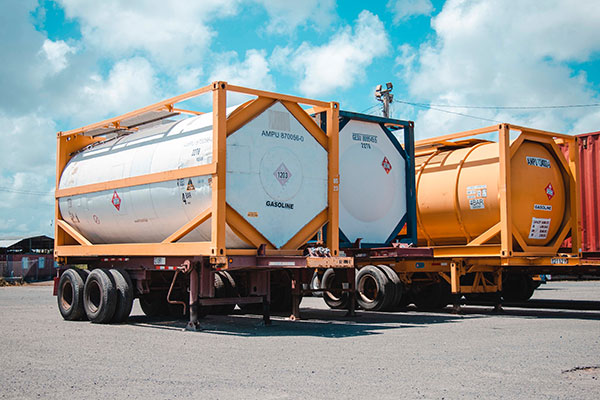
An ISO tank container is a certified vessel designed for the safe transport of liquid fuels. Built to international standards, it can be used across multiple transport modes, including road, sea, and rail, allowing fuel to move efficiently between ports and client facilities without additional handling.
Why do we use ISO tanks for fuel transport?
ISO tanks provide a flexible solution for bulk fuel transport. Their standardized design supports safe handling, regulatory compliance, and intermodal movement, while minimizing product contamination and reducing operational complexity compared with traditional drums or fuel trucks.
Can diesel be transported in ISO tanks?
Yes. Diesel and other liquid fuels can be safely transported in ISO tanks. Tanks are cleaned and certified before each load, helping maintain product quality and preventing cross-contamination during transit.
Is ISO tank fuel transport safe?
Yes. Safety is supported through a combination of certified ISO tanks, trained personnel, advanced pumping systems, and documented operational procedures. These measures help reduce the risk of spills, accidents, or delays during transport and unloading.
Do we provide bulk fuel transport across the Caribbean?
Yes. Royal Petroleum operates ISO tank transport throughout Puerto Rico, the U.S. Virgin Islands and neighboring territories. Deliveries are coordinated with port authorities and in accordance with local regulations to ensure efficient and timely service.
What fuel products can be transported?
Our ISO tanks can handle Diesel, Marine Fuel, Industrial Fuel, and Emergency Fuel Supply. Each product is transported in accordance with handling protocols suited to its specifications, helping clients maintain operational continuity and respond to high-demand or emergency situations.