
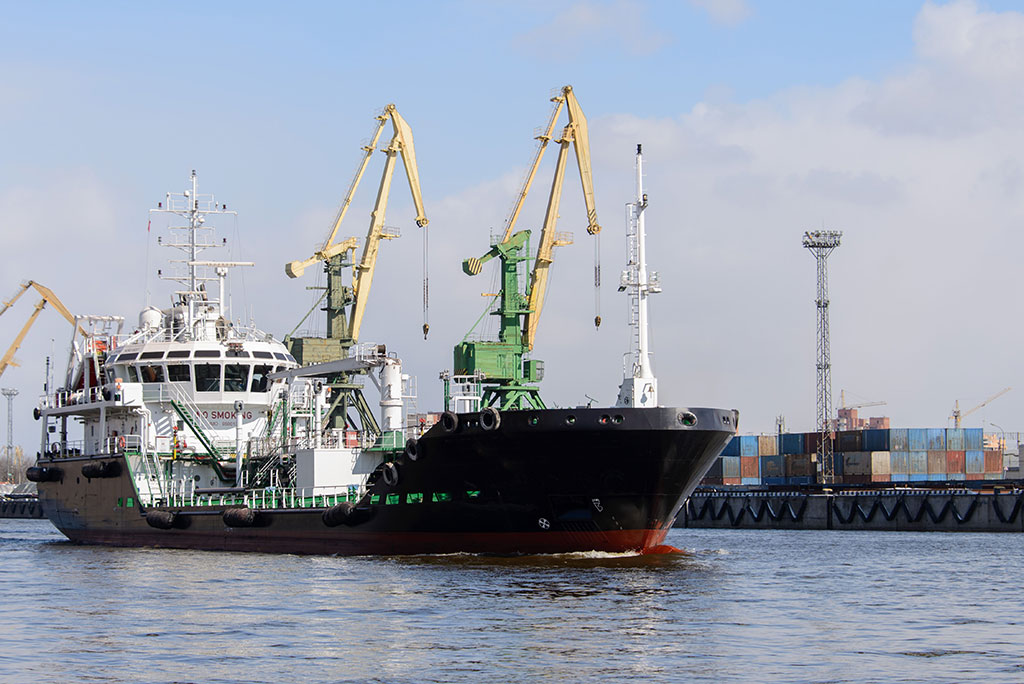
Royal Petroleum coordinates marine gas oil supply in Puerto Rico and selected Caribbean locations based on vessel requirements, requested volume, product availability, port access, delivery windows, route conditions, and the appropriate supply method. Depending on the operation, this may include bunkering services or truck-to-vessel bunkering.
MGO supply for modern marine operations involves more than confirming fuel availability. Vessel operators must also consider the required product grade, sulfur content, flash point, delivery timing, port access, documentation, and the fueling method available at the vessel’s location.
What is marine gas oil?
Marine Gas Oil, or MGO, is a distillate marine fuel used primarily in marine diesel engines and certain auxiliary equipment. Unlike residual fuels, MGO belongs to the category of marine distillate fuels, which are generally associated with cleaner combustion compared with heavier residual fuel options.
In marine operations, this fuel may be selected when operators require a marine distillate product that aligns with vessel requirements, fuel grade, sulfur content, flash point, and applicable port or regulatory conditions. Because marine fuel terminology can vary by supplier, specification, and operating context, the correct product should always be confirmed through the specification sheet and the vessel or engine manufacturer’s requirements.
ISO 8217 classifies different types of marine distillate and residual fuels, which is why MGO should be understood by its grade and specification rather than by name alone. For this reason, MGO supply should be coordinated through a delivery process that reviews the requested product, documentation, and vessel requirements before confirming the fueling plan.
Marine gas oil vs marine diesel
Marine Gas Oil and marine diesel are related terms, but they should not be presented as the same product without reviewing the actual fuel grade and specification. MGO is generally understood as a marine distillate fuel. Marine diesel, on the other hand, may be used more broadly as a general term for diesel fuel supplied for marine applications.
Marine Diesel Oil, or MDO, may refer to a different marine fuel grade and, depending on the specification, can include small amounts of residual components.
Ultra-low sulfur diesel, or ULSD, is also a separate product designation and should not be treated as automatically equivalent to MGO.
In technical guidance, CIMAC distinguishes marine gas oil from marine diesel oil by describing MGO as a distillate fuel and MDO as a fuel that may contain traces or components of residual fuel.
For operators, the practical distinction should be confirmed through the specification sheet, not only through the product name. Before supply is coordinated, the requested fuel should be reviewed according to grade, sulfur content, flash point, viscosity, density, engine manufacturer requirements, operating profile, and applicable regulatory or port conditions.
Benefits of marine gas oil
- Cleaner combustion. Compared with residual fuel oils, MGO is a lighter distillate fuel with fewer heavy fuel components. For this reason, it is generally associated with cleaner combustion when the selected product is compatible with the vessel’s engine and operating requirements.
- Lower sulfur content. MGO is available with different sulfur levels, depending on the product grade and specification. The exact sulfur content must therefore be confirmed through the applicable product documentation. In the U.S. Caribbean Sea Emission Control Area surrounding Puerto Rico and the U.S. Virgin Islands, fuel used onboard ships is generally limited to 0.10% sulfur by mass, unless an approved equivalent compliance method is used. Outside designated Emission Control Areas, the global MARPOL sulfur limit is 0.50% by mass.
- Regulatory compliance. Selecting an MGO grade with the required sulfur content can support regulatory compliance planning. However, the MGO designation alone does not confirm compliance. Operators must also consider the vessel’s route, applicable Emission Control Areas, product documentation, engine requirements, and any approved alternative compliance methods.
- Operational reliability. Depends on confirming the required fuel grade, quantity, availability, documentation, delivery schedule, port access, and fueling method before the vessel arrives. Coordinating these requirements in advance can reduce uncertainty around port calls and scheduled departures.
Who do we supply marine gas oil?
- Ferries often operate on fixed schedules and recurring routes. MGO supply for these operations should be coordinated with attention to timing, fueling access, and the need to reduce uncertainty around scheduled departures.
- Offshore support vessels may require fuel for offshore services, technical assistance, transport, or marine support. Because routes, assignments, and delivery windows can change depending on operational demand, these vessels often need flexible supply coordination.
- Commercial vessels require fuel planning aligned with cargo movement, port calls, vessel schedules, and route requirements. For these operators, supply should be coordinated with attention to fuel specifications, documentation needs, and the available delivery method.
- Harbor craft such as service vessels, workboats, and port support vessels may require recurring or scheduled fuel coordination based on frequency of use, operating windows, and access to the fueling point.
What are our MGO supply services
Royal Petroleum coordinates MGO delivery through bunkering services planned around the vessel, port, required volume, and operating conditions. Depending on the operation, the fueling plan may include truck-to-vessel bunkering when port access, local procedures, and safety conditions permit.
Bunkering services refer to the coordination of marine fuel supply for vessels within a port or maritime environment. Each operation is reviewed according to the vessel’s schedule, port procedures, receiving requirements, product availability, and delivery conditions.
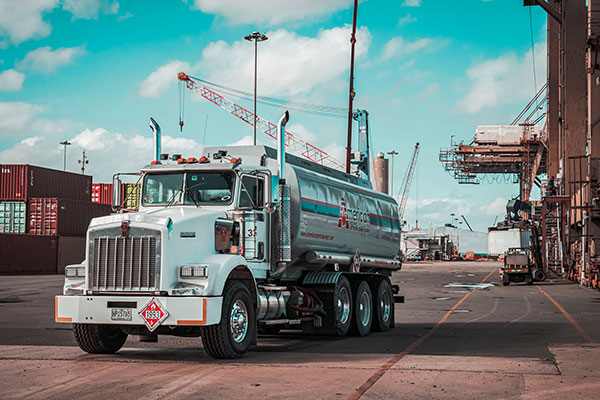
Truck-to-vessel bunkering is one of Royal Petroleum’s bunkering solutions. This method allows MGO to be transferred from a tanker truck directly to the vessel when access, local procedures, and operating conditions allow it.
Recurring or route-based requests may also be scheduled in advance, subject to product availability, port access, delivery windows, required volume, and applicable documentation requirements.
Why choose Royal Petroleum’s MGO supply services?
Royal Petroleum brings more than 25 years of operational experience to marine fuel coordination in Puerto Rico and the Caribbean. For MGO supply, this experience matters because operators need a supplier that understands both the product requirements and the delivery conditions surrounding each operation.
Our team reviews each request based on the required product specification, sulfur content, flash point, volume, vessel schedule, delivery method, and documentation requirements. This review helps identify whether the requested product and available delivery conditions align with the vessel’s needs before the operation moves forward.
Based in Puerto Rico, Royal Petroleum understands the logistics realities of supplying vessels across local ports and selected Caribbean locations. Coverage is reviewed according to product availability, port access, route conditions, and the operational requirements of each request.
Marine gas oil supply in Puerto Rico and Caribbean
Royal Petroleum coordinates MGO supply in Puerto Rico and selected Caribbean locations, with availability reviewed according to the requested product, port access, route conditions, delivery window, and applicable documentation. This allows operators searching for marine gas oil suppliers in Puerto Rico or the Caribbean to approach fuel planning with a clearer understanding of both regional logistics and product requirements.
Request Marine Gas Oil Supply
If your operation needs Marine Gas Oil in Puerto Rico or selected Caribbean locations, Royal Petroleum can help coordinate a supply option based on location, volume, vessel requirements, product specifications, delivery window, and availability.
Contact Royal Petroleum with the vessel type, delivery location, required MGO grade, estimated volume, and preferred delivery date so our team can review product availability and the appropriate supply method.
FAQs about marine gas oil
What is marine gas oil?
Marine Gas Oil, or MGO, is a distillate marine fuel used primarily in marine diesel engines and certain auxiliary equipment. The correct product should be confirmed by fuel grade, specification sheet, sulfur content, flash point, and vessel or engine manufacturer requirements.
Is MGO the same as marine diesel?
Not necessarily. MGO is a marine distillate fuel, while “marine diesel” may be used as a broader commercial term. Marine Diesel Oil, or MDO, can refer to a different marine fuel grade. The correct product should be confirmed through its specification, including sulfur content, flash point, viscosity, density, and engine manufacturer requirements.
What sulfur content does MGO have?
MGO does not have one universal sulfur content. The exact level depends on the product grade and specification. In the U.S. Caribbean Sea Emission Control Area surrounding Puerto Rico and the U.S. Virgin Islands, fuel used onboard ships is generally limited to 0.10% sulfur by mass, unless an approved equivalent method is used. Outside designated ECAs, the global MARPOL limit is 0.50% by mass.
Do you supply MGO in Puerto Rico?
Yes. Royal Petroleum coordinates MGO supply in Puerto Rico and selected Caribbean locations, subject to product availability, vessel requirements, port access, required volume, delivery timing, and the requested product specification.