
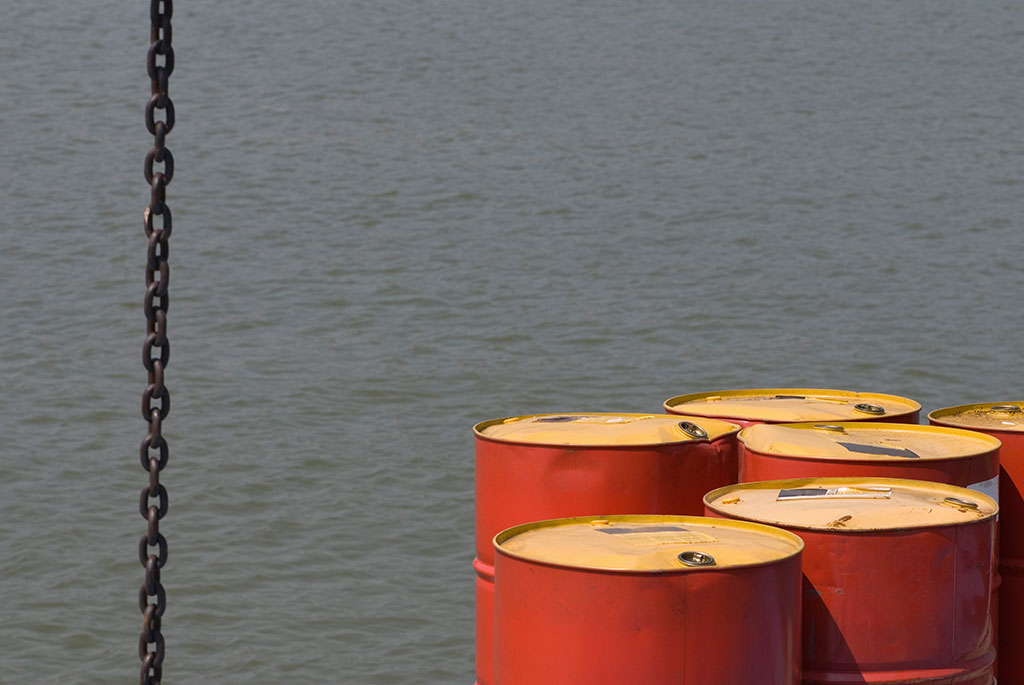
Marine gas oil, commonly referred to as MGO, plays a central role in today’s maritime fuel landscape.
As environmental regulations continue to evolve and vessel operators seek cleaner and more efficient fuel solutions, MGO has become a preferred option for many commercial and industrial vessels operating in Puerto Rico and throughout the Caribbean.
What is marine gas oil?
Marine gas oil is a distillate fuel used primarily in marine diesel engines. It is produced from lighter fractions of crude oil and contains significantly fewer impurities than residual fuels. This refined composition allows for cleaner combustion and more stable engine performance.
The growing adoption of MGO is closely linked to international environmental regulations. The International Maritime Organization has introduced strict limits on sulfur emissions through MARPOL Annex VI, particularly in Emission Control Areas.
While the Caribbean is not fully designated as an ECA, many ports and operators adopt ECA-compliant fuels to align with global standards and prepare for regulatory changes. As a result, marine gas oil has become a practical solution for vessels seeking both compliance and operational reliability.
Marine gas oil versus marine diesel oil
Although marine gas oil and marine diesel oil are often grouped together, there are important distinctions between the two. Marine gas oil is a pure distillate fuel with no residual components, while marine diesel oil may contain small amounts of heavier fuel fractions.
Because of its cleaner composition, MGO generally offers better combustion efficiency and lower emissions. It also reduces the risk of engine deposits and fuel system contamination. For vessels operating in ports with environmental restrictions or frequent port calls, MGO is often the preferred option.
Types of marine gas oil
Marine gas oil is defined under ISO 8217, the international standard that specifies requirements for marine fuels. Within this framework, several grades are commonly associated with distillate marine fuels.
DMA is the most widely used grade and is considered the standard marine gas oil for most applications. It offers low sulfur content and excellent ignition quality, making it suitable for modern marine engines and environmentally regulated operations.
DMB is slightly heavier and may contain trace residual components, while DMC is a heavier distillate grade used in more limited, specific scenarios.
Among these options, DMA is the most common choice for vessels operating in the Caribbean region.
Main characteristics of marine gas oil
- Low sulfur content. Helps reduce sulfur oxide emissions and supports compliance with international environmental regulations.
- High flash point. Improves safety during onboard storage and handling, reducing fire risk compared to lighter fuels.
- Stable density and viscosity. Ensures consistent fuel injection and reliable engine performance across different operating conditions.
- Clean distillate composition. Contains fewer impurities than residual fuels, which helps protect fuel systems and engine components.
- Good ignition quality. Supports smooth combustion and efficient engine starts, particularly in modern marine diesel engines.
Advantages of using MGO in marine engines
- Efficient combustion. Burns cleanly and efficiently, supporting stable power output and overall engine performance.
- Regulatory compliance. Meets IMO and MARPOL sulfur limits, making it suitable for vessels operating in regulated ports and environmentally sensitive areas.
- Reduced engine wear. Lower contaminant levels help minimize deposits, extending engine life and reducing maintenance needs.
- Operational flexibility. Allows vessels to operate across multiple ports without frequent fuel switching.
- No engine modifications required. Compatible with most marine diesel engines, simplifying adoption for both existing and new fleets.
Royal Petroleum’s marine gas oil supply solutions
Royal Petroleum supplies marine gas oil (MGO) through reliable bunkering solutions across Puerto Rico and the Caribbean. Our MGO is a high-quality, distilled fuel with an extremely high flash point, meeting marine fuel requirements and helping operators maintain safe, dependable vessel operations across regional and international routes.
Get in touch with Royal Petroleum!
Royal Petroleum supports fleets with service-focused bunkering operations designed to reduce disruption and strengthen fuel planning across the supply chain.
If you would like to learn more about MGO availability, bunkering operations, or discuss your marine fuel requirements in Puerto Rico and the Caribbean, contact us for further information.
Sources:
- International Maritime Organization. MARPOL Annex VI: Regulations for the Prevention of Air Pollution from Ships. IMO, https://www.imo.org/
- International Organization for Standardization. ISO 8217: Petroleum Products – Fuels (Class F) – Specifications of Marine Fuels. ISO, https://www.iso.org/home.html
- S. Energy Information Administration. Petroleum and Other Liquids: Distillate Fuel Oil. EIA, https://www.eia.gov/